
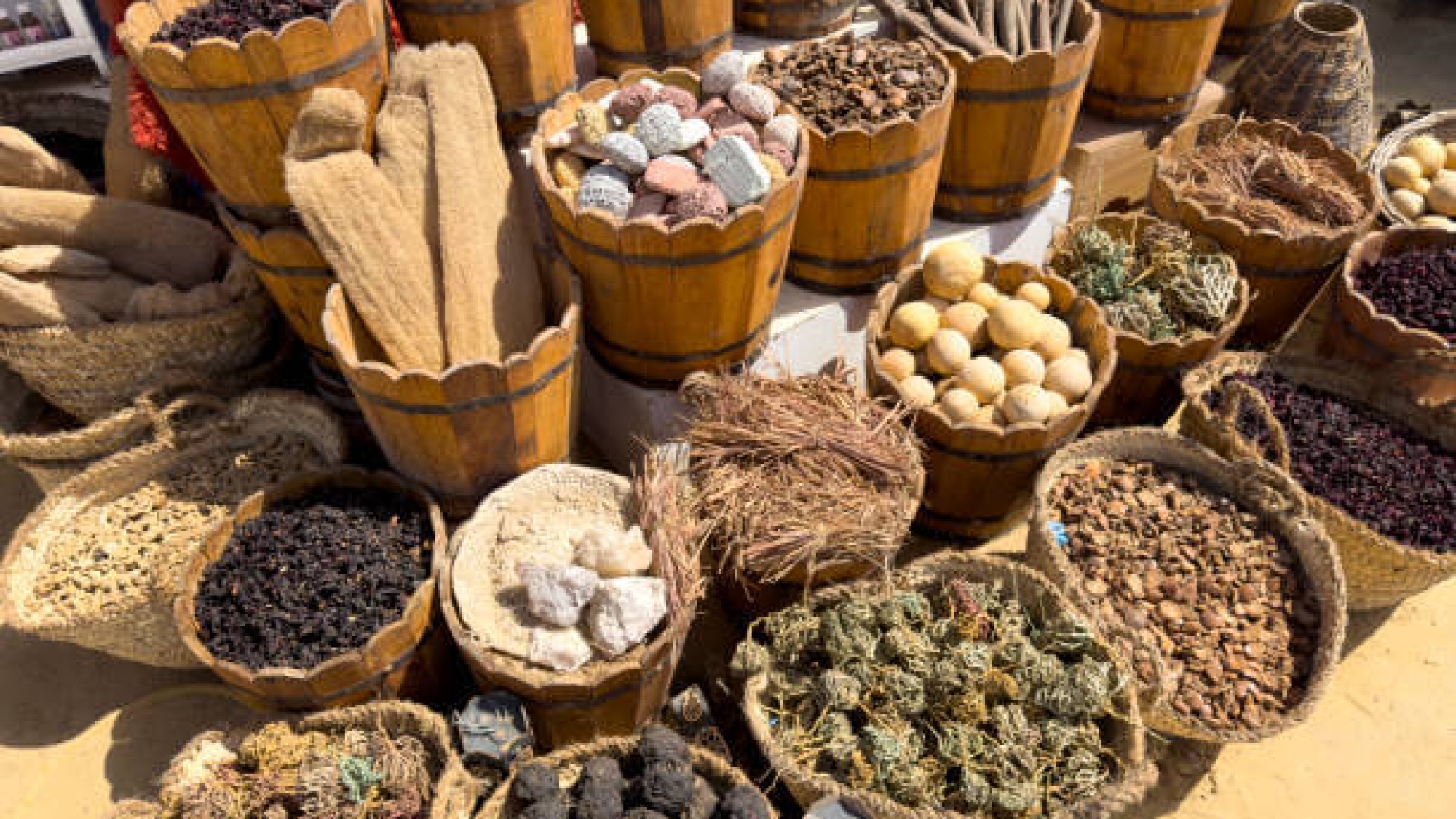
Every day, millions of Nigerians use traditional medicine, and some even combine it with their prescription drugs.
According to the Modern Traditional Medicine Practitioners of Nigeria (MTMPN), and aligned with WHO estimates for the African region, up to 80% of Nigerians patronise traditional medicine at some point in their lives.
Yet, it is estimated that a tiny fraction (likely fewer than 5%) of these remedies have undergone rigorous clinical trials to prove they work.
These gaps between cultural practice and scientific validation create real challenges for doctors, researchers, policymakers, and investors alike.
The question is not whether traditional medicine can be tested like modern drugs: it can!
What matters now is whether we can develop research methods, secure funding, and foster genuine collaboration amongst all stakeholders, including traditional healers, clinical scientists, regulators, and communities, instead of working separately or at odds with each other.
What Happens When Traditional Medicine Gets Validated:
In 1972, a Chinese scientist, Tu Youyou, studied a plant called Artemisia annua, which had been used for centuries in traditional Chinese medicine. Her team then conducted extensive clinical research on the lead compound, artemisinin, to evaluate its efficacy and effects.
Today, Artemisinin-based therapies are recommended by the World Health Organisation and are used globally. The market is worth hundreds of millions of dollars, and Tu Youyou later won a Nobel Prize for the work.
This shows us that:
- Traditional knowledge can evolve into world-class medicine when it is thoroughly researched.
- Scientific research doesn’t destroy traditional medicine; it validates it.
Nigeria is not behind. In fact, we are sitting on a goldmine of medicinal plants, generations of knowledge across various ethnic groups, and a large population that can support both research and practical applications.
The challenge of validating Traditional Medicine in Nigeria.
There’s a huge gap between how traditional medicine is used in everyday life and how much of it has been standardised, and this lack of evidence causes real problems for healthcare, regulation, and the health economy.
This absence of evidence creates four major structural problems:
1. Doctors Treating Without Evidence
Many patients already take herbal remedies alongside conventional treatments. But without clinical data, doctors cannot confidently guide dosing, warn about interactions, or assess risks.
Patients may also avoid disclosing herbal use not out of carelessness, but because they anticipate judgment, which creates a dangerous blind spot in clinical care.
Some risks are already documented:
- Bitter leaf (Vernonia amygdalina) can dangerously lower blood sugar. When combined with diabetes drugs like Metformin, it can lead to severe hypoglycemia (dangerously low blood sugar).
- Garlic (Allium sativum): Acts as a natural anticoagulant; it can increase bleeding risk, specifically in patients already taking blood thinners.
- Dongoyaro (Azadirachta indica): Can cause liver and kidney toxicity if used in uncontrolled, high concentrations. It can also interfere with liver enzymes (CYP450) that process other medications, leading to unpredictable drug levels in the blood.
“The typical oncology patient takes traditional medicines. Either you like it, or not.”
Dr Hannatu Ayuba, Consultant Radiation and Clinical Oncologist, National Hospital, Abuja
Before the recent NAFDAC announcement by the Director-General, Prof. Mojisola Adeyeye, many herbal products were “Listed”, meaning they were approved based on safety and low toxicity alone. This did not mean they were proven to work for the diseases they claimed to treat.
NAFDAC has now made its position clear: herbal products cannot claim to “cure” diseases without clinical evidence. The agency is driving a shift from “Listing” (safety-only) to “Full Registration,” where efficacy must be scientifically proven via trials.
This regulatory gap led to predictable outcomes:
- Unverified health claims
- Inconsistent product quality
- Contamination and adulteration
- Increased consumer exposure to unreliable products
2. Economic and Intellectual Opportunity Cost
Traditional medicine is a multi-billion-dollar global industry. China’s regulated traditional medicine sector exceeds $100 billion annually, India’s Ayurveda sector generates billions, and South Africa earns export revenue from validated plants.
Nigeria, with its rich plant diversity and deep traditional knowledge, participates at almost zero scale, not due to a lack of resources, but a lack of validated products. This gap also allows external actors to research, patent, and commercialise Nigerian knowledge without fair benefit-sharing.
3. Safety Myths and Dosage Challenges
A common belief is that plant-based medicine is automatically safe. Scientifically, this is false: the principle of dose-response applies to all substances; anything can become harmful at a certain dose, even water.
Traditional remedies often lack standardised dosing, making it impossible to define safe upper limits, toxicity thresholds, or disease-specific guidance. The observed risks include:
- Bitter leaf triggers severe diarrhoea, sometimes misinterpreted as cleansing, and causes hypoglycaemia when combined with antimalarials
- Dongoyaro (Neem) is widely used for malaria, but can raise liver enzymes and cause renal failure in high doses a serious risk for patients with underlying organ issues.
- Garlic increases bleeding risk when taken with anticoagulants
- Neem reduces antimalarial effectiveness
- Ginkgo biloba increases the risk of life-threatening bleeding when combined with blood thinners
With rising kidney disease prevalence in Nigeria, unregulated herbal use is a recognised risk factor, which highlights the urgent need for population-level clinical data because most patients use traditional remedies alongside conventional care.
4 Major Challenges in Testing Traditional Remedies
Traditional medicine is not difficult to test because it is “unscientific.” It is difficult because it was never designed for laboratory environments. Unlike synthetic drugs, which are built from single molecules under controlled conditions, traditional remedies are complex.
Challenge 1: Complex Mixtures
Traditional remedies combine multiple plants, carrying a full spectrum of active compounds. Instead of a single clearly defined chemical, researchers are dealing with a network of interacting molecules.
“Traditional medicine often claims to treat many diseases. From a biological perspective, this is unlikely. A single remedy cannot truly treat both diabetes and malaria unless it is only reducing symptoms rather than targeting the disease itself.”
— Dr Mansur Ramalan, Clinical Pharmacologist
This complexity makes it more challenging to identify what is working, what is not, and where potential risks may lie.
Challenge 2: Natural Variation in Plants
Plants are living systems, and their chemistry changes in response to their environment.
Soil quality, rainfall, sunlight, harvest time, and drying methods all influence the concentration of active compounds.
Our traditional remedies vary by region, how they are prepared, the soil where they grow, and even the season. Rain and dry seasons alone can change the amount of active compounds in a plant.
Challenge 3: Non-Standardised Dosing
Traditional dosing relies on practical household units: a handful of leaves, a cup, a spoon.
These are not fixed measurements, and they can change from person to person.
When cooking, for instance, we estimate with our eyes and hands. That can work in food but fails in medicine, where small changes in dose can mean treatment or toxicity.
Even if weight is measured, the concentration of active compounds varies, making consistent dosing and safety guidance difficult.
Challenge 4: The Placebo Problem
Many traditional remedies have strong tastes and smells. To solve this, researchers must use “active placebos” (which mimic the taste) or comparative effectiveness trials (testing the herb against a known drug) to ensure the study remains “blind” and scientifically valid.
Nigeria’s Validated Traditional Medicine: Niprisan
Nigeria has shown it can validate traditional remedies. Niprisan (also known as Nicosan or Niclovix), a landmark success developed from plants used by healers to manage sickle cell disease, was created by the National Institute for Pharmaceutical Research and Development (NIPRD).
It went through clinical trials in Nigerian patients, was approved by NAFDAC, and received orphan drug designation from the U.S. FDA.
This proves that:
- Nigerian scientists can conduct high-quality trials
- Traditional knowledge can produce internationally recognised medicine
- Global standards are achievable
Yet Niprisan faced market challenges: limited physician training, weak insurance coverage, manufacturing scale-up issues, and low doctor awareness. Validation alone is not enough. Sustained impact requires a strategy that links high-quality clinical data to regulatory compliance and post-market pharmacovigilance.
Common Questions About Traditional Medicine Validation
Q1: Will scientific validation take ownership of traditional knowledge in Nigeria?
No, not when communities are involved from the start.
Nigeria joined the Nagoya Protocol in 2022, which protects traditional knowledge. It says that researchers must get clear permission from communities before any study begins, explain how the knowledge will be used, and agree on how benefits will be shared. If anyone tries to steal or misuse the knowledge, the law can be used against them.
The community must know what the research is for, how the information will be applied, and what any commercial outcome might be. All benefits, both financial and non-financial, must be documented
China protected its traditional medicine by enforcing strict benefit-sharing rules and intellectual property laws. That’s why their industry grew without losing control.
Traditional healers can protect themselves by joining associations, documenting their work, and taking part in research teams as partners
Q2: How can doctors safely prescribe traditional medicine without standard dosing?
They cannot. That’s why validation is necessary.
Patients already use traditional medicine every day, but doctors don’t have enough information on what dose works or how these remedies interact with drugs.
By creating standard doses, interaction data, and clear treatment guidance. It turns a raw remedy into something a clinician can use responsibly.
“For every clinical trial that needs to be done on traditional medicine, the pharmacist should be on board, the doctors should be on board, the pharmacologists should be on board, the bioethicists should be on board the traditional medicine practitioner should be on board.”
_ Dr Joy Oladimeji-Salami.(clinical pharmacologist)
Q3: Is Investing in Traditional Medicine Research Worth the Risk?
Investing in traditional medicine validation carries high risk and high reward, much like regular pharmaceutical drug development. Not every product will succeed, but successful ones can be very profitable.
The Risks:
- Scientific Failure: The remedy proves ineffective or unsafe in trials.
- Regulatory Delays: Navigating the new 2024 NAFDAC mandate for efficacy trials.
- Market Acceptance: Challenges with doctors, patients, or manufacturing scale-up.
- Supply Chain: Unstable or seasonal raw material supply.
- IP Issues: Difficulties securing patents or protecting indigenous knowledge.
The Rewards:
The global traditional medicine market is growing faster than the conventional pharmaceutical market. Successful products can target large disease markets. Early investors gain advantages in patents, doctor acceptance, and export revenue. Investors can reduce their risks by funding multiple products at once, releasing money in stages, and working with us at UCTSS
Q4: Is public funding for traditional medicine research economically justified in Nigeria?
Yes, when it is seen as economic growth, not just research.
Investing in traditional medicine can strengthen local drug manufacturing, create jobs, reduce import dependence, cut healthcare costs, increase tax revenue, and attract investors.
Countries that invested early, like India and China, have built billion-dollar industries and strong export markets.
Beyond money, validation improves national health security, supports universal healthcare, encourages biodiversity protection (because plants now have economic value), and positions Nigeria as a regional leader.
Q5: What happens when clinical trials show a traditional medicine does not work?
Negative results still help the system.
Clinical trials are meant to reveal the truth, not to confirm assumptions. If a remedy doesn’t work, the result still protects patients, prevents harm, stops wasteful spending, and helps researchers focus on better options.
Negative results also show which compounds may need modification. This is normal even in pharmaceutical development; most formulations fail before one succeeds.
Some are useful, some are not useful, some are harmful. We continue developing what proves useful.
The Role of Technology in Traditional Medicine Validation
In the last few years, Nigeria has seen major growth in digital health tools that are helping us solve problems of access to care, poor data, and slow systems, and they can also support the validation of traditional medicine.
- Computer-Aided Drug Discovery (CADD):
Instead of testing plants one by one in a lab, computer tools can scan hundreds of plant compounds at once. They help researchers quickly see which ones might be effective or harmful before moving to real lab work.
- Artificial Intelligence (AI):
AI can study large sets of data from patient outcomes to the chemical makeup of plants and identify the most promising compounds faster. This reduces guesswork and speeds up discovery.
- Mobile Health (mHealth) Apps:
Mobile apps can connect patients and traditional healers, even in remote areas. They also help track symptoms, treatment responses, and whether patients are taking both herbal and conventional medicines safely.
- Telemedicine Platforms:
Telemedicine allows traditional healers, doctors, pharmacists, and patients to speak directly without being in the same place. This helps build collaboration and makes expert guidance available to rural communities.
- Electronic Medical Records (EMRs):
EMRs make it possible to record both herbal use and prescription drugs in one place. This gives researchers and clinicians real-time information to understand safety, interactions, and treatment outcomes.
The need for this kind of integration became even clearer during COVID-19, when traditional remedies gained more attention and digital tools became essential for tracking cases and sharing health updates.
But there are still challenges. Some rural areas have poor internet access, and many digital health tools are not yet compatible and connected. Closing these gaps is crucial if we want to fully integrate technology into traditional medical research.
With the right systems in place, technology can help Nigeria validate its traditional remedies faster, safer, and with stronger evidence
What Needs to Happen to Properly Validate Traditional Medicine in Nigeria
For Traditional Healers:
Validation should protect and strengthen, not take power away from traditional healers. They need:
- Stronger organisation through recognised associations to ensure collective bargaining power and standardised practices.
- Better documentation of remedies, preparation methods, and storage processes to safeguard intellectual property.
- Benefit-sharing agreements in research projects so that communities directly benefit from any commercial or scientific use of their knowledge.
- Participation as co-investigators in studies, rather than merely providing remedies, ensures their expertise guides research outcomes.
The goal is not to change traditional practice, but to make it safe, respected, and compatible with modern clinical standards.
For Researchers
Researchers must approach traditional medicine with respect and collaboration. Key actions include:
- Listening before extracting: understand the cultural context and the healer’s rationale.
- Clear ethical frameworks: Establish benefit-sharing and consent from the outset.
- Multidisciplinary teams: involve pharmacologists, clinicians, ethicists, and traditional practitioners.
- Study designs adapted to complexity: account for mixtures, botanical variability, and dosing differences rather than forcing traditional remedies into rigid pharmaceutical models.
- Validation works only when researchers see healers as partners, not subjects.
For Investors and Pharmaceutical Companies
- Investing in traditional medicine requires long-term thinking:
- Understand it is not a quick-profit sector; success comes from patience, infrastructure, and local partnerships.
- Respect community ownership: intellectual property rights and fair compensation are essential.
- Manage risk strategically: through milestone-based funding, portfolio approaches, and partnerships with research institutions.
- Recognise the huge opportunity, but only through ethical, locally grounded approaches.
For Policymakers and Regulators
Government support is the backbone of a functioning validation ecosystem:
- Strengthen NAFDAC’s capacity to review trials, enforce standards, and monitor safety.
- Create financial incentives for research and product development.
- Protect indigenous knowledge via enforceable intellectual property and anti-biopiracy laws.
- Provide a regulatory framework that enables collaboration between researchers, healers, and investors, rather than leaving them to navigate uncertainty.
When all stakeholders act together, traditional healers, researchers, investors, and policymakers in Nigeria can safely, ethically, and effectively validate traditional medicine, creating a system that benefits both patients and the national economy.
Nigeria’s Opportunity in Traditional Medicine
Nigeria sits at a pivotal moment for traditional medicine. With its rich biodiversity and generations of indigenous knowledge, we can transform centuries-old remedies into validated treatments that meet international standards.
The success of Niprisan demonstrates that Nigerian science and traditional knowledge can produce real, effective medicines. Scientific validation, when paired with strong collaboration between traditional healers, researchers, and regulators, creates a pathway for safer treatments, protected intellectual property, and potential economic growth.
NAFDAC’s 2024 clinical trial mandate provides the structure to turn potential into action. Early movers, whether traditional practitioners, researchers, investors, or policymakers, will shape the system and secure long-term benefits for communities and the nation.
With the right commitment, Nigeria can lead Africa in traditional medicine, protecting its knowledge, supporting health innovation, and creating opportunities that extend beyond borders. UCTSS is ready to guide this journey. We offer expertise in regulatory strategy, clinical trial execution, data management, and pharmacovigilance.
References
- World Health Organisation. (2013). WHO Traditional Medicine Strategy 2014-2023. Geneva: WHO Press.
- National Agency for Food and Drug Administration and Control. (2024). Policy Update: Clinical Trial Requirements for Herbal Product Efficacy Approval. Abuja: NAFDAC.
- UCTSS Roundtable Discussion: Should Traditional Medicine Be Tested Through Clinical Trials?
- Tu, Y. (2015). Nobel Prize Lecture: Artemisinin—A Gift from Traditional Chinese Medicine to the World. Nobel Media AB.
- Convention on Biological Diversity. (2010). Nagoya Protocol on Access to Genetic Resources and the Fair and Equitable Sharing of Benefits Arising from their Utilisation. CBD Secretariat.
Add a Comment