

The data collected during a clinical trial must be accurate, timely, and verifiable to support the credible outcomes and regulatory approval.
Without reliable data, pharmaceutical and medical device companies cannot demonstrate that their products are safe and effective, a core requirement for any medical innovation.
These companies must design and execute large clinical trials involving multiple research sites(such as hospitals and clinics) that engage directly with patients.
Ensuring that this process is efficient, ethical, and successful is important, and this is where Contract Research Organizations (CROs) become indispensable partners.
The Strategic Role of a CRO in Nigeria’s Emerging Research Ecosystem
A CRO (Contract Research Organisation) supports pharmaceutical and biotechnology companies by managing the entire or part of the clinical trial process. They offer specialised services across different phases of therapeutic areas.
CROs are engaged by sponsors to plan, execute, and monitor clinical trials in compliance with global standards.
For example, if you’re a small pharmaceutical company developing a new drug and preparing for human trials after pre-clinical testing, a CRO gives you immediate access to expert teams, tools, and systems that would otherwise take years to build in-house.
In Nigeria, where the clinical research ecosystem is still developing, CROs also play a crucial role in building local capacity, training investigators, and ensuring trials align with national regulations governed by the National Agency for Food and Drug Administration and Control (NAFDAC)and the National Health Research Ethics Committee (NHREC).
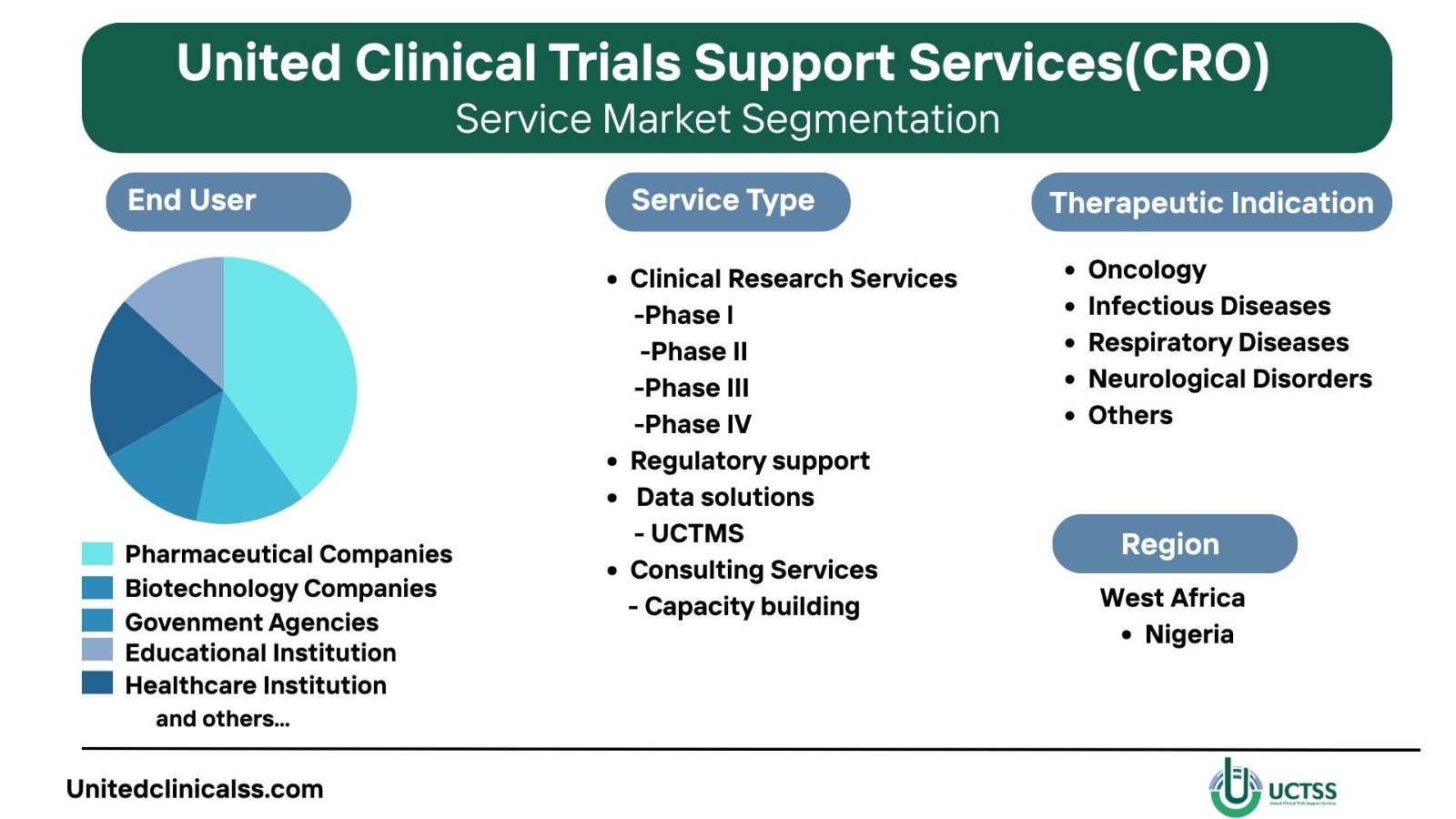
How a Specialized CRO Delivers Measurable Progress
At its core, a CRO functions as a strategic partner for pharmaceutical and biotechnology companies to provide the expertise and resources needed to conduct successful and efficient clinical trials.
Some of the key functions of CROs include:
1. Solving the Patient Enrollment Challenge in West Africa
One of the biggest challenges in clinical trials is finding and enrolling eligible participants. Studies show that nearly 80% of clinical trials fail to meet enrollment targets within planned timelines, leading to significant delays and financial loss. In the Nigerian context, cultural nuances and logistical hurdles can amplify these delays.
CROs help close this gap by:
- Identifying and recruiting qualified participants
- Ensuring the recruitment process is ethical and compliant with regulatory standards.
- Engaging local communities and using culturally relevant outreach to build trust and improve participation rates.
2. Advancing Data Integrity via UCTMS and Global GCP Standards
In clinical research, data reliability is non-negotiable. Poor data management can compromise a study by delaying or blocking regulatory approval.
At UCTSS, we have pioneered the use of UCTMS, a locally tailored Clinical Trial Management System that brings all the essential parts of a clinical trial into one integrated platform. It streamlines key activities like monitoring, source data verification, documentation, and reporting.
By building strong relationships with systems like UCTMS, trial sites, and deploying trained monitors, CROs can ensure that:
- Data is captured correctly and promptly.
- Any issues or discrepancies are resolved quickly to maintain trial timelines.
- The trial adheres to international Good Clinical Practice (GCP) standards.
3. Streamlining NAFDAC and NHREC Regulatory Approvals
Navigating regulatory environments, especially in multiple jurisdictions, is complex. Even a single documentation error can delay or set back a study, and CROs have the expertise to manage submissions accurately and efficiently.
In Nigeria, NAFDAC recently reaffirmed its.WHO Maturity Level 3, WHO Maturity Level 3 (ML3) status, meaning compliance expectations are now at a global peak.
The National Health Research Ethics Committee has officially transitioned to the NHREC E-Portal, a mandatory digital platform for all protocol submissions.
A local CRO supports sponsors by:
- Preparing complete, accurate regulatory submissions tailored to NAFDAC’s 2026 digital registration process.
- Reducing turnaround time for ethics and regulatory approvals through existing relationships with oversight bodies.
- Ensuring trials are always “audit-ready” for international inspections.
4. Leveraging Genetic Diversity for Global Insights
One of Nigeria’s greatest assets in 2026 is its genetic diversity. Research shows that Eurocentric genetic models often fail to predict disease risk in African populations. By partnering with a Nigerian CRO, sponsors can access diverse genomic data that improves drug efficacy and safety profiles for a global market.
5. Cost-Efficiency
Working with a CRO can significantly reduce the financial and operational burden of running a trial rather than hiring and training an internal team. Sponsors can gain immediate access to experienced personnel, established processes, and tested infrastructure.
CROs add value by:
- Keeping projects within budget.
- Minimising unforeseen costs and delays.
- Accelerating time-to-market to improve return on investment.
5. Bridging Public-Private Collaborations
CROs can collaborate with public hospitals, research institutes, and regulators to improve the design, management, and monitoring of clinical trials. These partnerships are essential for the Federal Government’s goal of establishing 435 clinical trial centres across Nigeria by 2028.
We need this kind of collaboration in Nigeria to drive widespread awareness and build a stronger clinical research system.
Key ways to do this include:
- Organising hands-on GCP training for local research teams at public hospitals
- Partnering with universities to introduce GCP into health-related academic programs
- Creating mentorship opportunities led by experienced clinical trial professionals
Benefits of Using a Contract Research Organization in Your Study
- Speed: Faster startup timelines and patient recruitment.
- Expertise: Access to specialists in project management, regulatory affairs, pharmacovigilance, and data analytics.
- Quality: Standardised procedures that align with international guidelines.
- Scalability: CROs can manage small Phase I trials and large-scale multinational studies alike.
- Compliance: Full alignment with ethical and regulatory requirements across markets.
These benefits not only streamline clinical research but also improve the likelihood of successful product approval and commercialization.
Partnering with a Contract Research Organization.
There are still major gaps in the clinical data infrastructure across Nigeria. However, with the right partners, sponsors can run high-quality trials that generate meaningful outcomes and improve healthcare for all.
UCTSS is a Contract Research Organization working to advance early and late-phase clinical trial research in Nigeria and West Africa.
We manage all aspects of site and patient recruitment, project oversight, and regulatory submissions from start to finish. Our local knowledge and experience allow us to design and manage clinical trials that are both globally compliant and locally effective.
If you’re planning a clinical study or want to explore how we can support your research goals, our expert team is ready to connect with you.
Contact us today to learn how UCTSS can drive measurable progress in your next clinical trial.
Add a Comment